
Chatham County Traffic Court Records
Which court holds your citation? Check the ticket. Chatham Recorder’s Court keeps county traffic citations plus certain local matters. State Court receives some misdemeanor and traffic cases bound over from Recorder’s Court or a municipality. City courts run citations through their own dockets. Bloomingdale, Garden City, Pooler, Port Wentworth, Thunderbolt, Tybee Island, and other towns each have their own court. The agency that wrote the ticket does not settle the question. The court name and appearance details printed on the citation do.
A traffic docket can list the citation, court date, and plea. Payment orders and later events show up there too. The clerk holds it as a court case record. Savannah parking, street-sweeping, and red-light camera tickets go through a city Mobility and Parking system. That route sits outside the Chatham Recorder portal.
Chatham Recorder Citation Search
The Recorder’s vendor portal gives you several ways in. Citation number is the cleanest. Other tabs take a driver-license number and state. A vehicle plate and state works too. So does a name and birth date, or a business name. One more path asks for a Social Security number and date of birth, though you should only share personal data inside the official court system when it is truly required. The Chatham Recorder’s Court search portal is the official vendor route. The official page confirms the court identity and the search tabs it offers.
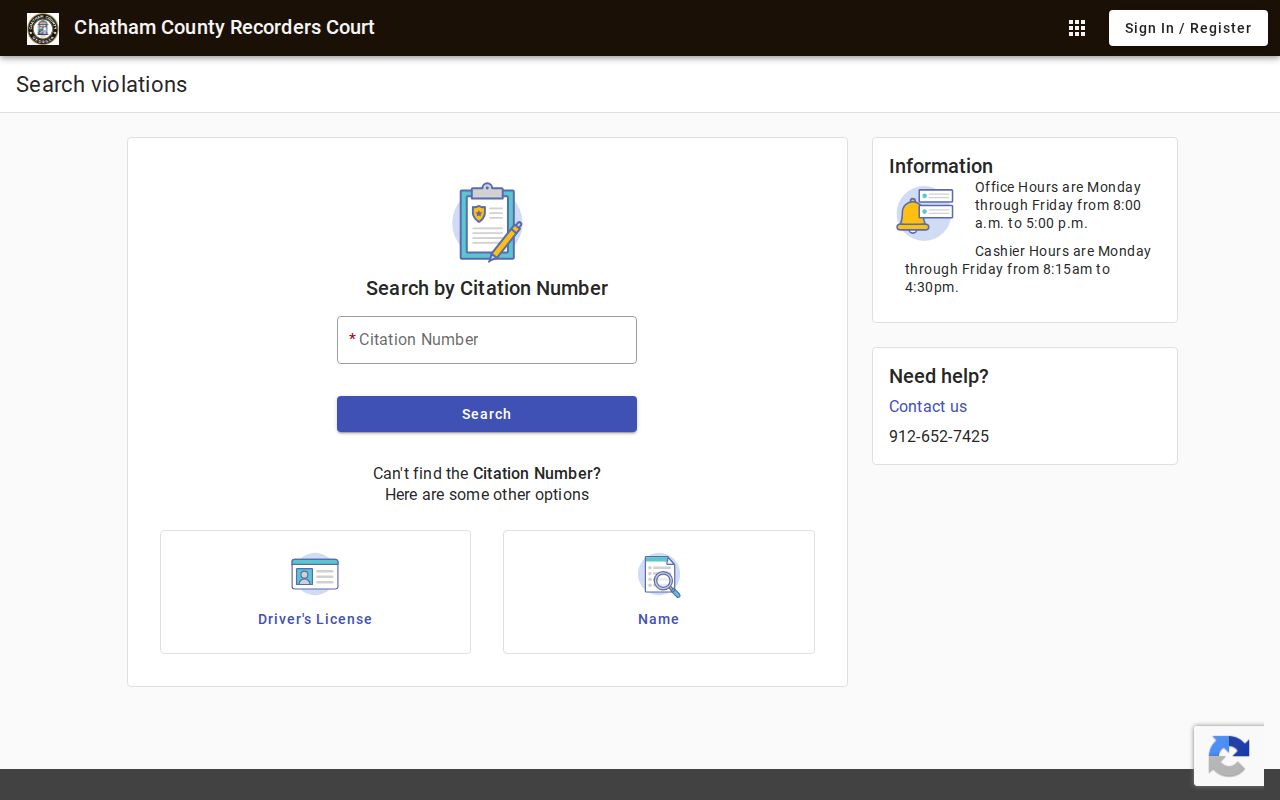
The portal handles searches and eligible payments. It does not promise that a new citation, a judicial change, or a separate Georgia driver file has updated in real time.
| Search path | Fields |
|---|---|
| Citation | Citation number |
| License | License number and issuing state |
| Vehicle | Plate number and state |
| Name | First name, last name, and date of birth |
| Business | Business name |
Looking Up a Traffic Ticket
Skip the portal when it comes up empty. Use every other channel. Recorder’s Court answers at 912-652-7425 and sits at 133 Montgomery Street, Room 101, Savannah. Posted hours run Monday through Friday, 8 a.m. to 5 p.m., with cashier hours from 8:15 a.m. to 4:30 p.m. A municipal citation needs that city court’s own portal, counter, and phone line.
- Read the issuing court and citation number.
- Use that court’s official citation search first.
- Try the supported name or vehicle fields if needed.
- Check the printed date and the court’s calendar.
- Call or visit the clerk if no result appears.
- Request a certified disposition when formal proof is required.
Georgia has no single statewide trial-court docket search. Odyssey/re:SearchGA can help with participating Chatham cases once a citation becomes a State Court matter. It still does not replace the municipal or Recorder’s source.
Chatham Traffic Clerk Contacts
The clerk can confirm whether a ticket posted. The office also knows whether an appearance is mandatory and which record can be copied. Magistrate Clerk Rebecca Batey is a separate lower-court custodian. Recorder’s and State Court keep their own traffic matters. Contact the office that actually holds the citation. Mailing the same request to every court just wastes time. The Magistrate Court clerk page is one assigned lower-court source. It shows the clerk contact route and the fact that Chatham County has several distinct custodians.
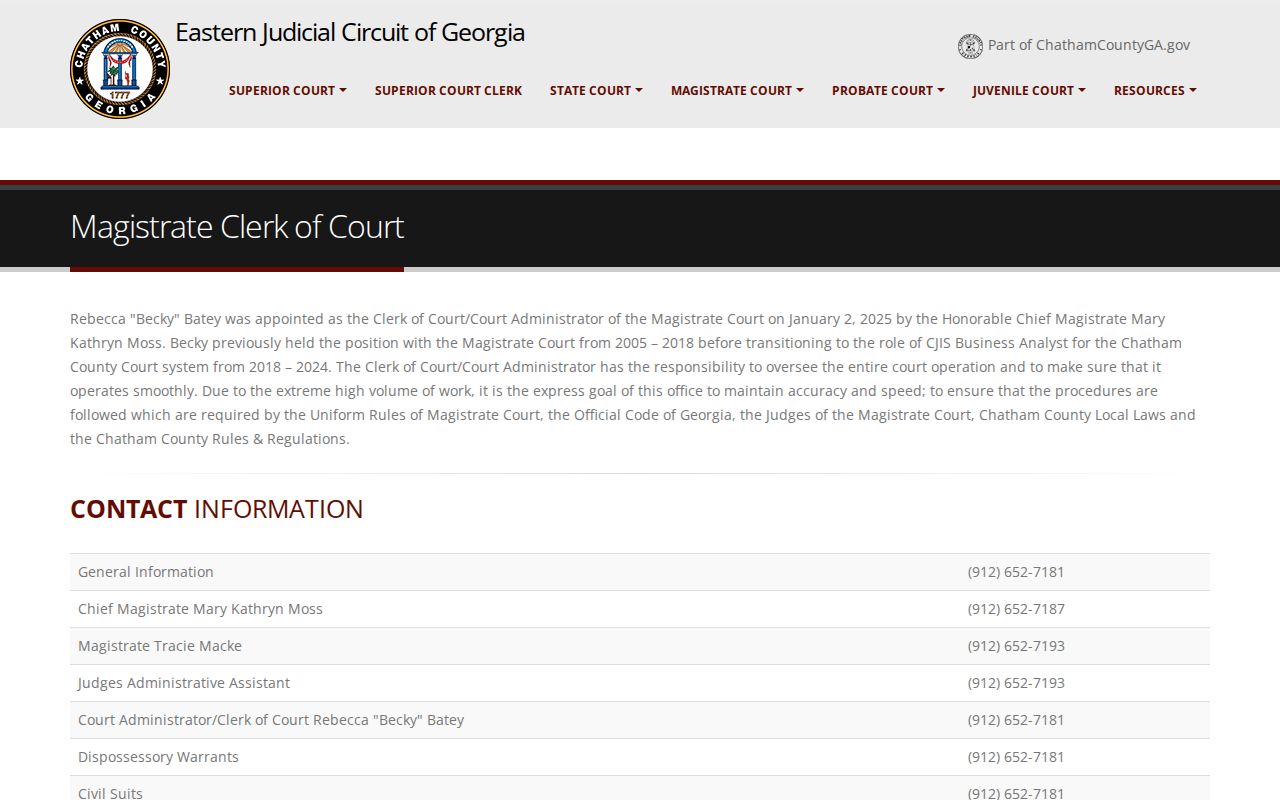
For an ordinary Recorder citation, call Recorder’s Court first. Magistrate fees can still matter when ordering records held in that separate court.
How to Find Your Traffic Court Date
The ticket gives you the first date. Confirm it with the issuing court, since posting delays and later resets happen. Chatham County Court Proceedings lists a Recorders category. Odyssey Events and Hearings covers participating locations. Compare the court, location, time, case or citation number, and newest event. A reset does not dismiss the charge.
| Citation number | Enter the identifier printed on the ticket, shown as Citation Number in the Recorder portal. |
|---|---|
| Issuing court | Recorder’s Court, State Court, or the named municipal court. |
| Date and time | The appearance, arraignment, or other traffic setting. |
| Location | The courtroom or court office shown by the court. |
| Status | Pending, paid, disposed, reset, or an access-limited result. |
If your date has passed, call the court at once. An empty portal result does not remove the duty to appear.
Chatham State Payment Channels
State Court takes cash, money orders, cashier’s checks, and cards when you pay in person. Personal checks are not accepted. Cards carry a posted 2.95 percent convenience fee, and an approved payment plan adds a $20 setup charge. Those terms belong to State Court alone. Do not assume they apply to a city citation. The State Court Fine Collection page is the official payment source, identifying the county system for State fines and restitution.
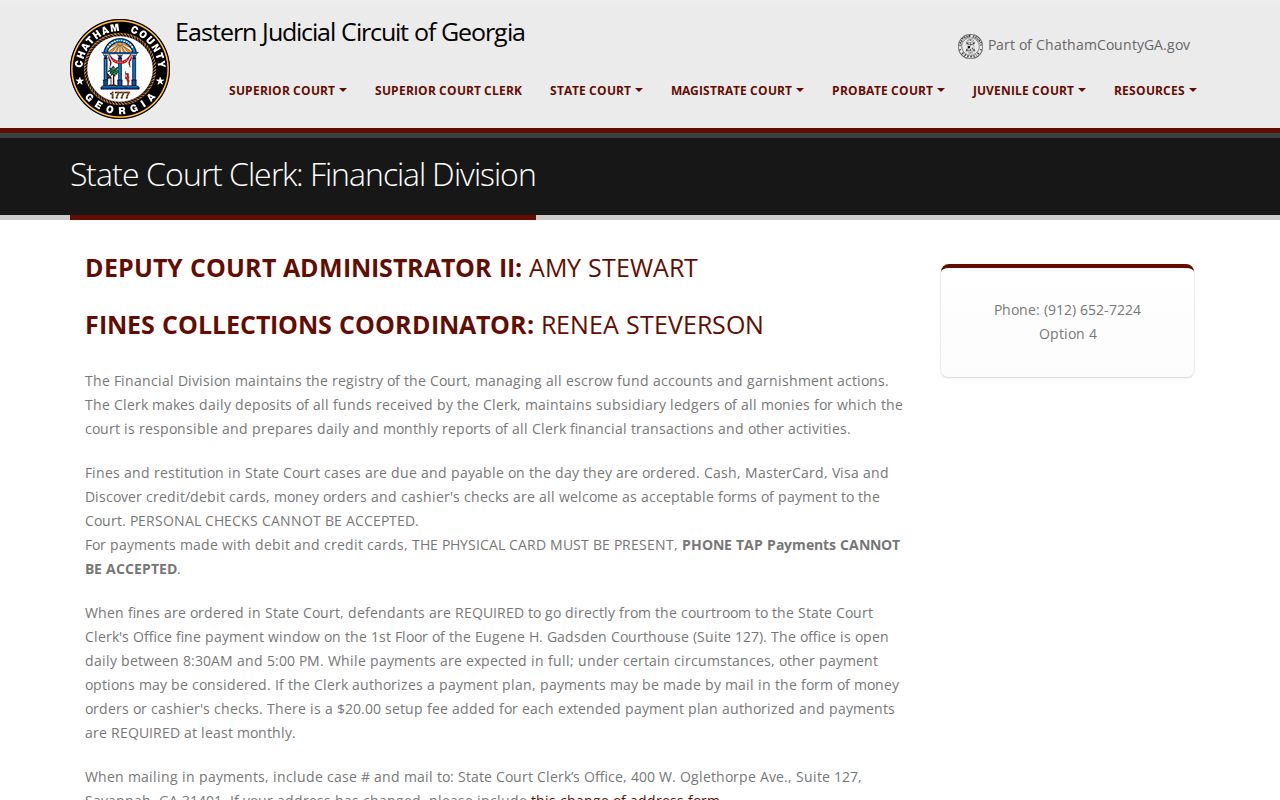
Recorder’s and municipal courts each publish their own eligible payment methods. A portal payment is a court response, not just an administrative shortcut.
Pay or Contest a Ticket
Paying an eligible citation generally enters the response tied to a guilty plea. Contesting means following the issuing court’s not-guilty and appearance procedure instead. Some charges cannot be paid online. Those require a personal appearance. Check the rule printed on the citation and the official court page. Court staff or a lawyer should answer case-specific questions, since these choices carry legal effects.
| Pay the citation | Contest the citation |
|---|---|
| Use only an eligible official payment route. | Appear or enter the plea as the court directs. |
| Meet the date and time stated by the court. | Keep the scheduled date unless the court resets it. |
| The case record reflects the plea and disposition. | The court sets the next hearing or trial step. |
Failure to appear: Recorder’s Court may impose contempt, add $100, and begin a license-suspension process. Other State Court matters may generate a warrant.
Garden City and Port Wentworth say it plainly: paying is effectively a guilty plea. Local rules differ, so the city named on the ticket controls the first step.
Chatham Traffic Copy Charges
A paid fine is not proof of the outcome. When you need official proof for a job or an insurer-free purpose like a court filing, get a certified disposition with the court's seal from the clerk who issued it. Copy charges differ from one office to the next. Superior Court's form and the Magistrate Court's posted schedule list the known Chatham County copy amounts. Recorder's Court and the municipal courts set their own. Check with whichever clerk holds your traffic case before you send money. The Magistrate Court fee page posts that court's filing, copy, certification, and service fees in one schedule.
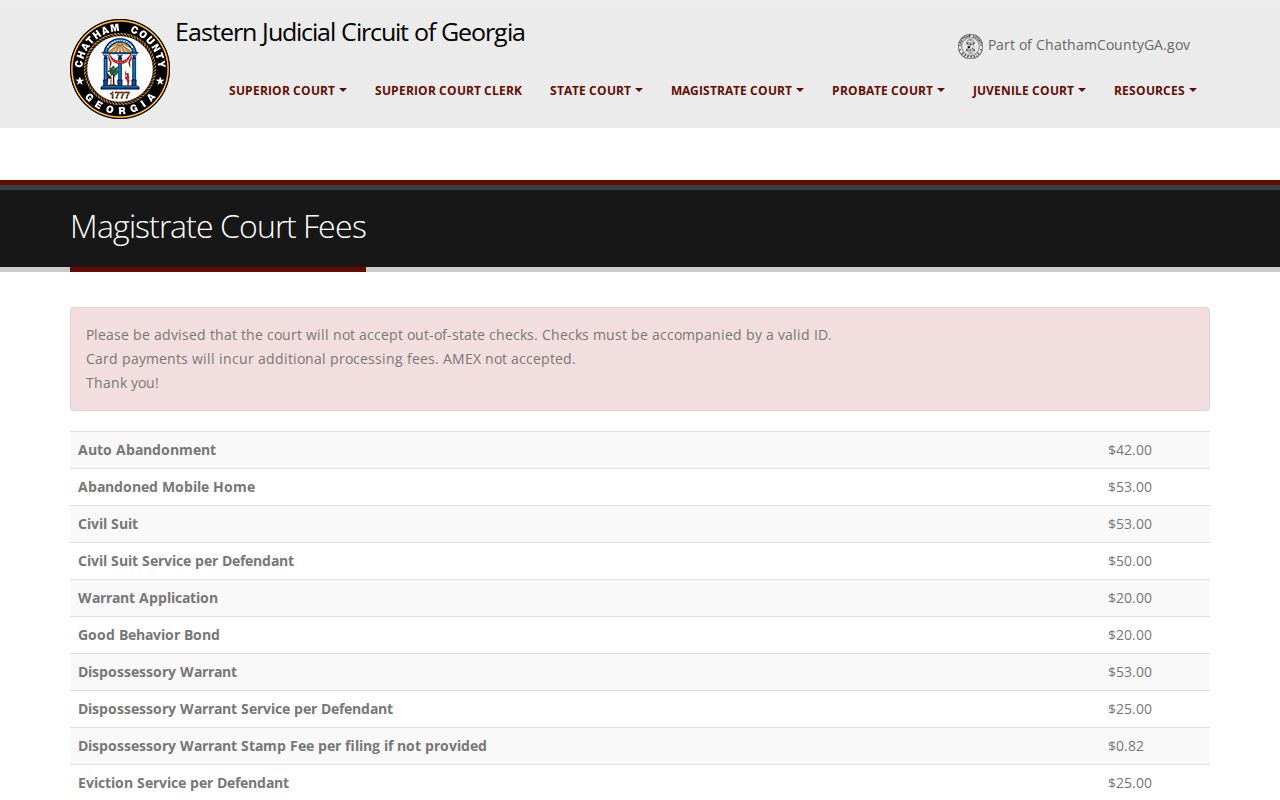
Call the issuing clerk first and confirm the current charge before mailing any funds. A fee listed by one Chatham County traffic court tells you nothing about another court's price.
Traffic Court Record vs Driving Record
Two different files, two different offices. The court that heard your traffic case keeps the court record. Georgia's Department of Driver Services keeps a separate licensing history, fed by outcomes the courts report. If you must document a dismissed or reduced matter to DDS, a certified court disposition is the paper that does it.
| Court traffic record | DDS driving record | |
|---|---|---|
| Custodian | Issuing court clerk | Georgia DDS |
| Shows | Citation, plea, disposition, payment, and docket events | State licensing history reported through official channels |
| Request | Court portal, phone, counter, or certified-copy request | DDS record process |
Here the court record is what matters. It shows which court heard the citation, when the hearing was set, and what the clerk entered on the docket.
Chatham Open Records Fallback
Sometimes the usual public route comes up short. Put a focused written request to the office that holds the item. List the issuing court, the citation or case number, the party name, the document you want, a date range, your delivery choice, and contact information. Georgia law allows lawful charges and exemptions. An office may bill you or withhold part of a file. No request can unseal a protected record. The Georgia Attorney General's request instructions walk through addressing a public-record request the state's way.
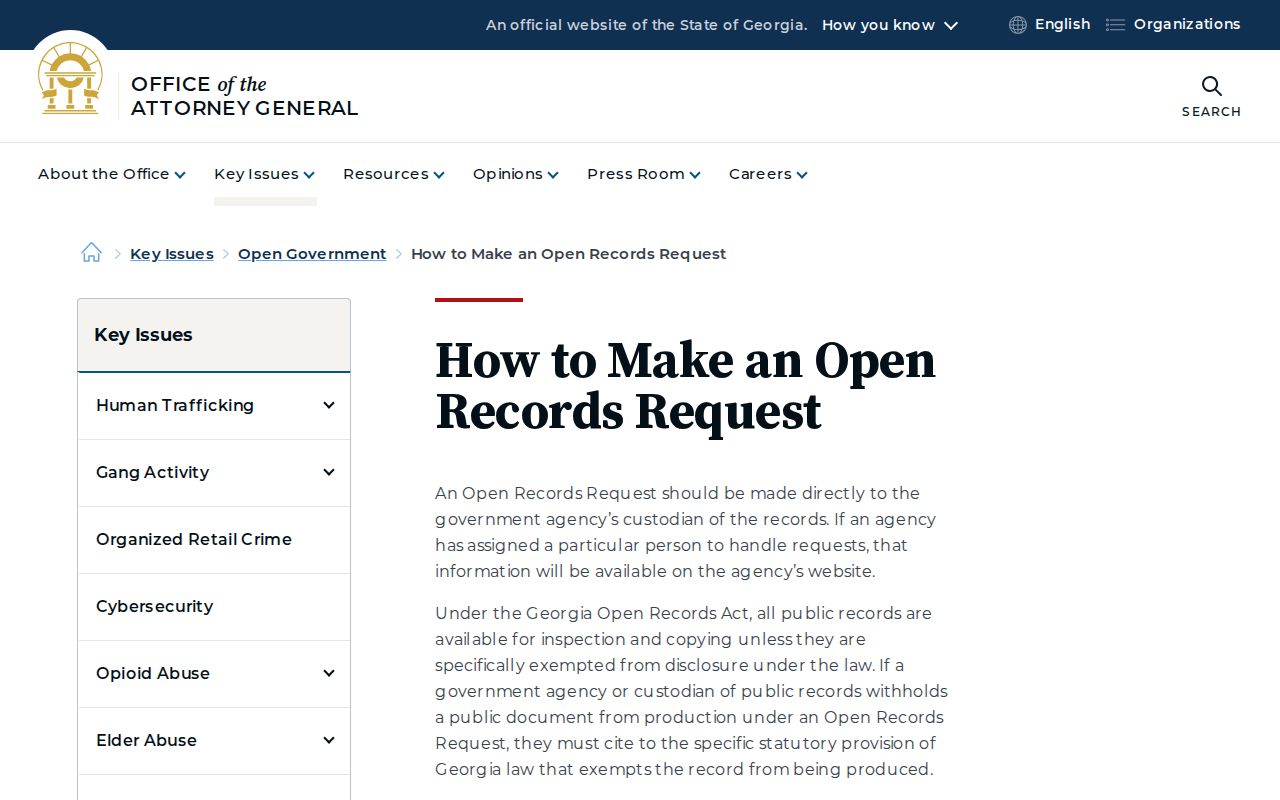
If an agency withholds material, ask it to name the exemption it relied on. For the traffic case itself, the issuing clerk is still the best source.
Copies and Fees
Traffic costs come in several flavors. There is the citation amount, court-added consequences, payment service charges, and copy fees. Mixing them up causes real confusion. A Recorder's Court failure-to-appear fee has nothing to do with copying. A State Court card charge is not the fine itself. Only the issuing court can quote the live balance. It can also state your remaining options.
| Item | Posted amount | Source |
|---|---|---|
| Recorder’s FTA addition | $100 | Recorder’s Court |
| State Court card convenience fee | 2.95% | State Fine Collection |
| Approved State payment plan setup | $20 | State Fine Collection |
| Magistrate certified first page | $2.50 | Magistrate fee schedule |
| Magistrate plain copy | $0.25 per page | Magistrate fee schedule |
Call the court when a total is unclear; never pay through an unofficial solicitation.
Chatham Traffic Access Rules
Public access still bends to redaction, confidentiality, and the court's own control. The Georgia Open Records Act gives you a request framework. Court records also answer to judicial access rules. The Attorney General notes that search and retrieval time, copying costs, and exemptions can affect a request. Each can shape what comes back. The Georgia Open Government FAQ covers the state's guidance on cost, timing, and protected information for record requests.
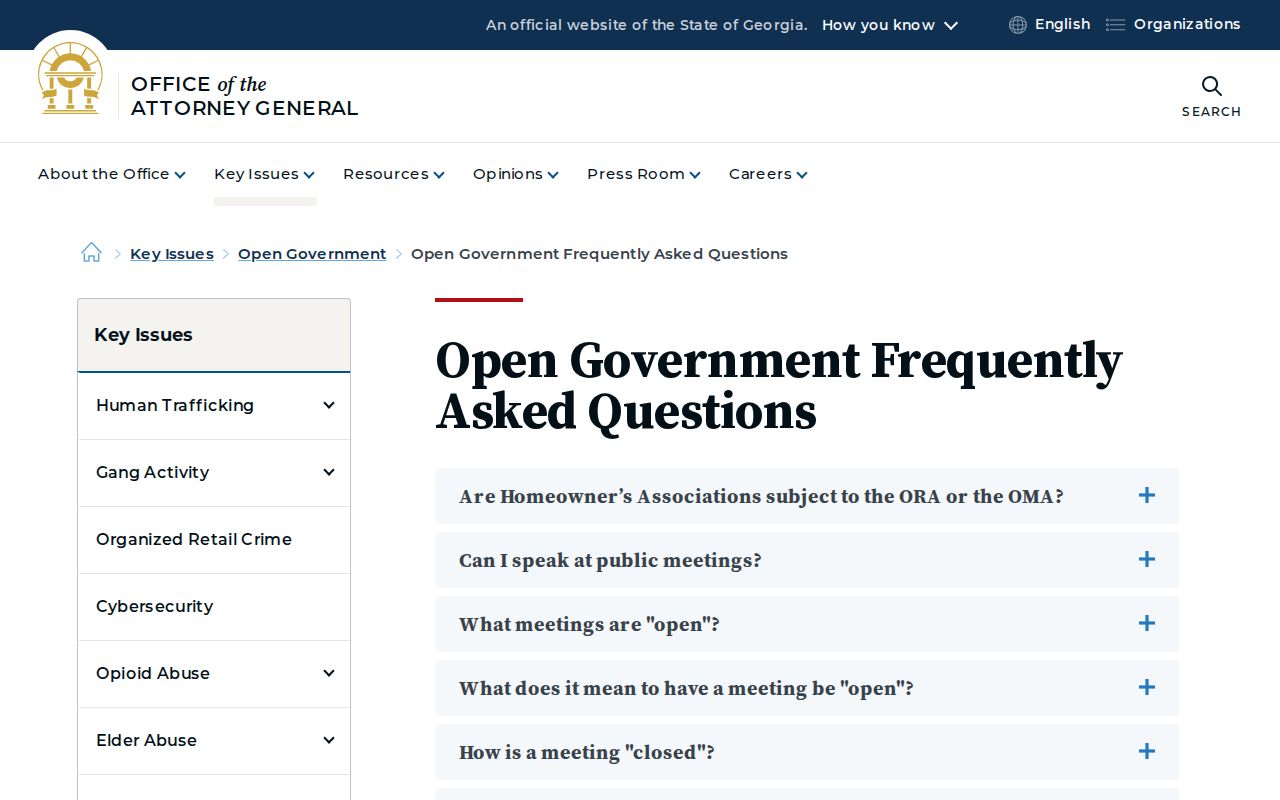
Public access does not put every identifier on display. Use the court portal with care, then verify the final record with the originating clerk. For a newly issued city ticket, hold onto the paper citation even after an online match shows up. It names the first court and the original appearance instruction. For a paid matter, keep the vendor confirmation while the clerk catches the case record up. If you later need formal proof, order the certified disposition from the issuing court. A payment screen is never the court's final judgment. When a court says a matter transferred, ask for the receiving court and the transfer date. Those two details bridge a municipal or Recorder search to the later Chatham State Court record. A focused traffic-record request should name the issuing court. It should also give the citation or case number, the name as printed, and the exact item sought. A docket entry, a payment receipt, and a certified disposition are three different things. Ask whether the court can send the copy by mail, email, pickup, or another documented channel. Confirm the current charge before sending funds. Georgia's request framework allows redaction and lawful withholding. A public index can show the event while the underlying image stays restricted. When a municipal or Recorder's case is bound over, keep both identifiers close. The city or Recorder clerk can explain the first stage. State Court becomes the source for the later county case once entry is made. That entry may take one to six weeks. Search both stages in order. An ordinary transfer delay will not look like a lost citation.