
Searching Chatham County Civil Dockets
Chatham County sends the public to Odyssey/re:SearchGA for case lookups. Smart Search takes a case number or a party name typed Last, First. Advanced filters let you narrow things by court location, business name, judicial officer, case number, or cross-reference. Pick the civil court before you trust a match. The same name can surface in unrelated cases.
Public terminals sit in State Court, Suite 127, and with the Superior Clerk. For State civil questions, call 912-652-7224 Option 3. The Superior Clerk takes calls at 912-434-8920. Magistrate Court keeps its own clerk at 912-652-7181 for small claims, dispossessory, garnishment, and related records.
- Identify Superior, State, or Magistrate jurisdiction from the complaint, summons, or case type.
- Search Odyssey by case number first, or enter the party or business name.
- Filter the court location and open the matching caption and civil case type.
- Read filing, service, answer, motion, setting, and judgment events in date order.
- Request the filed order or a certified copy from the correct clerk when needed.
Chatham County Civil Docket Courts
Civil jurisdiction splits three ways. Superior Court takes the broad civil and domestic matters: divorce, land and property cases, protective orders, and claims beyond the lower courts. State Court hears contract and tort actions, garnishments, personal-property foreclosures, and other civil matters not reserved for Superior Court. Magistrate Court covers claims up to $15,000. It also handles dispossessory cases, garnishments, trover, FiFas, and post-judgment work.
| Court | Typical civil docket | Custodian |
|---|---|---|
| Superior Court | Broad civil, domestic, land, property, and protective-order matters | Superior Court Clerk |
| State Court | Contract, tort, garnishment, and personal-property matters | State Court Clerk |
| Magistrate Court | Claims up to $15,000, dispossessory, garnishment, and enforcement | Magistrate Clerk |
A county civil complaint does not normally get filed in municipal court. Those courts mostly handle local traffic, ordinance, and limited criminal matters.
The official State Civil Division lays out State Court jurisdiction and its search routes.
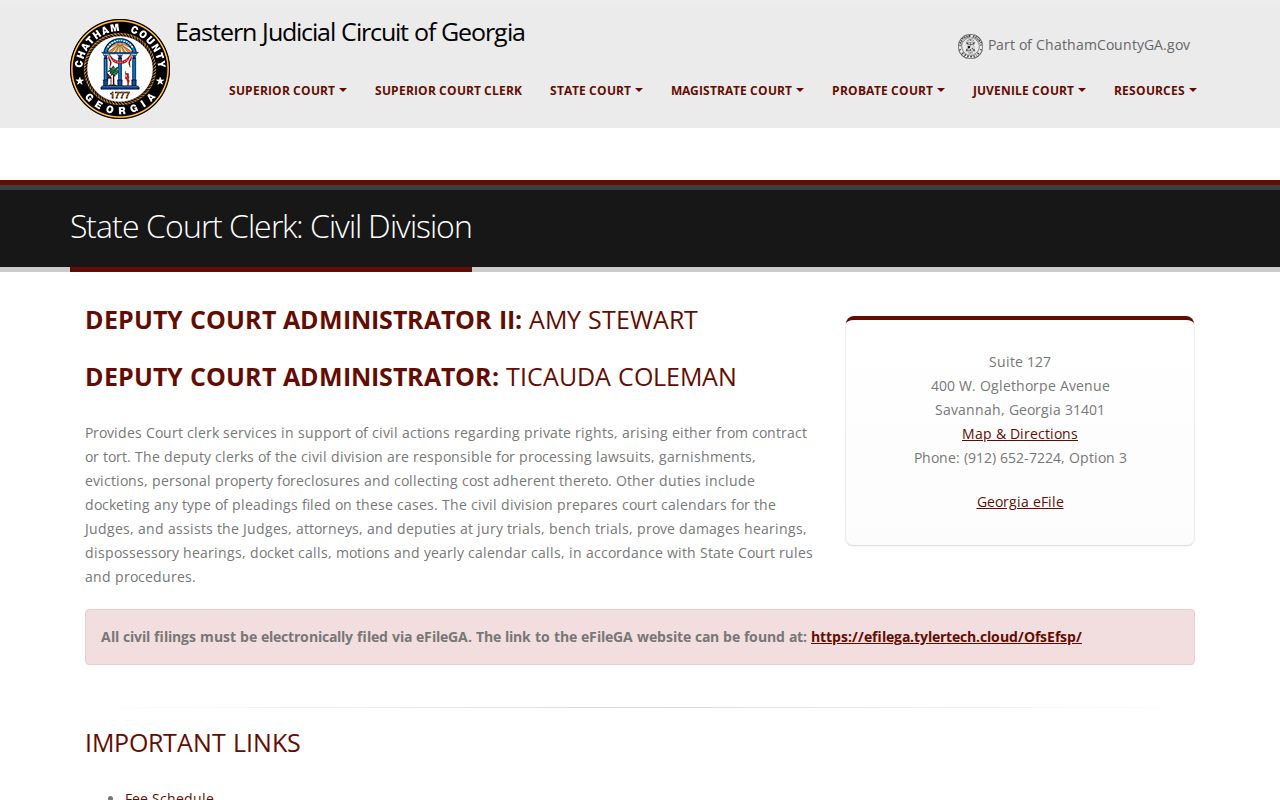
That official division page helps you keep State civil cases apart from Superior domestic files and Magistrate small-claim records.
Inside a Chatham County Civil Docket
A civil docket tracks the life of a suit. Its header may carry the case number, filing date, court, judge, case type, caption, status, and disposition. Party roles can include plaintiff, petitioner, defendant, respondent, garnishee, or another role. Attorney information shows up when entered.
| Case header | Case number, filing date, location, judge, case type, caption, and public status. |
|---|---|
| Parties | Plaintiff or petitioner, defendant or respondent, garnishee, and counsel roles. |
| Filings | Complaint, petition, summons, answer, counterclaim, motion, and order entries. |
| Service | Issuance and return events that must be read apart from the initial filing. |
| Hearings | Date, time, location, judge, and setting type when available. |
| Outcome | Judgment, dismissal, appeal, or post-judgment execution activity. |
One catch: a docket can list a linked document without showing its image to an anonymous user. Registered access or a clerk request may be needed. Chatham publishes no universal civil case-number format. Copy the full portal identifier instead of inventing a sample code.
eFileGA and Chatham Civil Dockets
Per the local civil division, all State Court civil filings go through eFileGA. Superior civil and family filings also have an electronic route. Keep the roles straight, though. eFileGA is a filing system, not the public docket search. A filer submits there. A reader tracks accepted case activity in Odyssey. The actual record comes from the clerk. The Georgia eFileGA landing page is the official filing entry point.
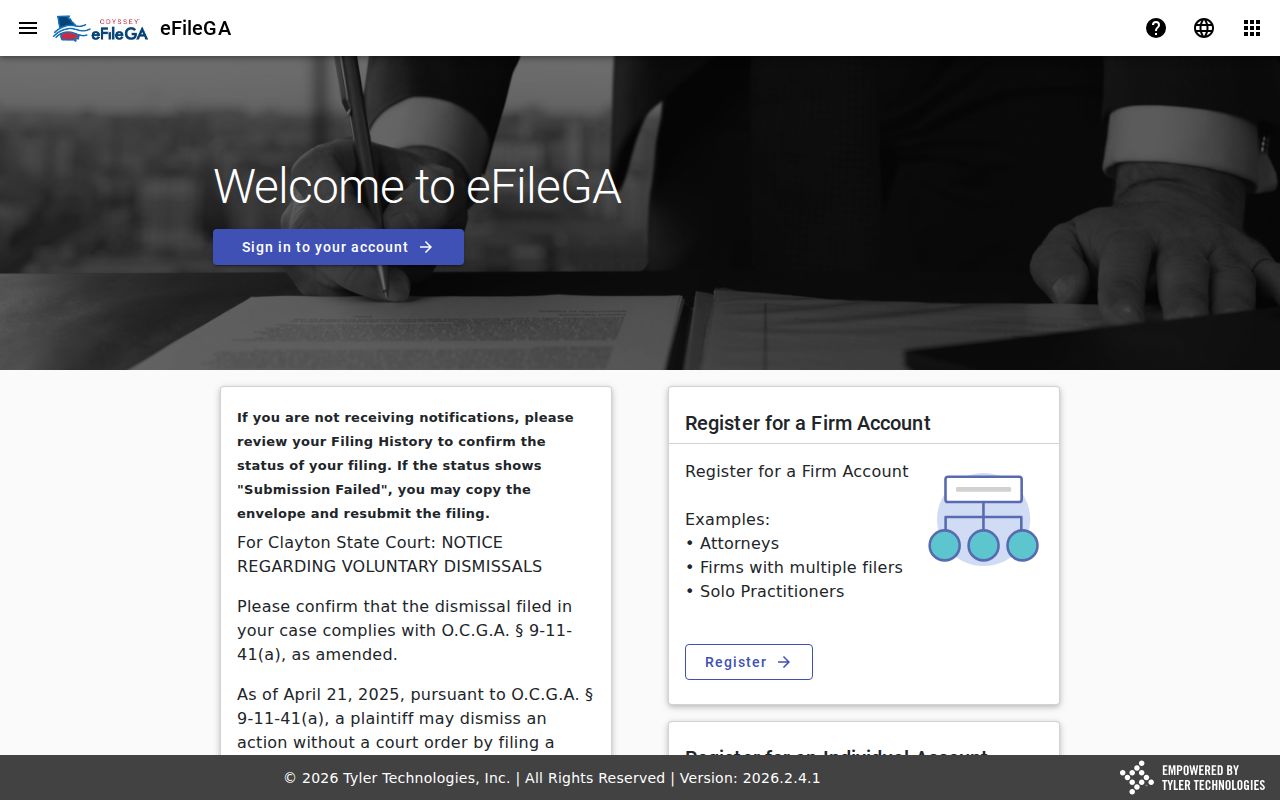
That split explains a common confusion. Submitting a document and finding its public docket entry are two different tasks.
Do not confuse the systems: eFileGA sends a filing to the court. Odyssey/re:SearchGA displays public case activity after processing.
Civil Case Types on the Docket
Chatham County civil records span a wide range. Broad Superior suits sit at one end. Limited Magistrate claims sit at the other. Which docket you need depends on the relief sought, the subject, and the amount. Read with care. A filing fee tells you nothing about the amount in controversy, and an event label does not prove that service or judgment actually occurred.
- Superior civil and domestic matters, including divorce, land, property, and protective orders
- State Court contract and tort actions within its concurrent jurisdiction
- Magistrate claims up to $15,000
- Dispossessory and possession proceedings on their own Magistrate path
- Garnishment, FiFa, and other post-judgment enforcement entries
A complaint, issued summons, service return, answer, judgment, and appeal are all separate events. Read the whole chain. If no service event appears, do not assume the filed complaint ever reached the other party.
Chatham Civil Docket Dispossessory Path
A dispossessory is a Magistrate possession proceeding. It has its own filing, service, hearing, and fee path. Being a civil dispute does not push it into the State Court civil route. Chatham County Court Proceedings may label a session "Dispossessory Hearings." The case record stays with the Magistrate clerk.
Start at Magistrate Court and keep the case number. The Magistrate filing fee is $53, with service charges depending on the action. Copies run $0.25 per page, and certification starts at $2.50 for the first page. Those figures come from the Magistrate schedule, so do not mix them with Superior fees.
The split still matters after judgment. Garnishment, FiFa, and post-judgment interrogatories can generate later entries. Those entries belong to the enforcement record. They do not start a new general State Court lawsuit.
Civil Docket Settings and Hearings
Civil settings show up in Odyssey Search Hearings and in the county's Court Proceedings interface. The date-facing list may include session, time, judge, courtroom or location. It also lists attorney, case number, and party label. Settings vary. A typical civil setting covers docket call, status conference, motion hearing, dispossessory hearing, garnishment, trial, and jury trial.
A setting is never the outcome. Docket call organizes cases. A status conference reports posture and next steps. A motion hearing takes up a request before the court. If a date moves, check the newest event and any filed scheduling order. The Chatham County court dates resource walks through the full confirmation process.
- Docket call
- A calendar call used to organize pending cases and settings.
- Status conference
- A case-management setting to report readiness, posture, or next steps.
- Dispossessory
- A Magistrate proceeding concerning possession of property.
- Garnishment
- A post-judgment collection filing with its own docket events and fees.
Chatham Civil Docket Copy Channels
Tammie Mosley is Clerk of Superior Court. She keeps the civil and domestic files for Superior Court in Chatham County. Her Civil Division offers several ways to get copies. Options include public terminals, online copies, mail requests, walk-in service, and eCertification. Walk-in final-order service runs Monday through Friday, 8 a.m. to 5 p.m. State Court and Magistrate records live with their own clerks, so route those requests elsewhere. The Superior Clerk Civil Division page lists every Chatham County civil record access and copy route. That official page shows current details for each channel.
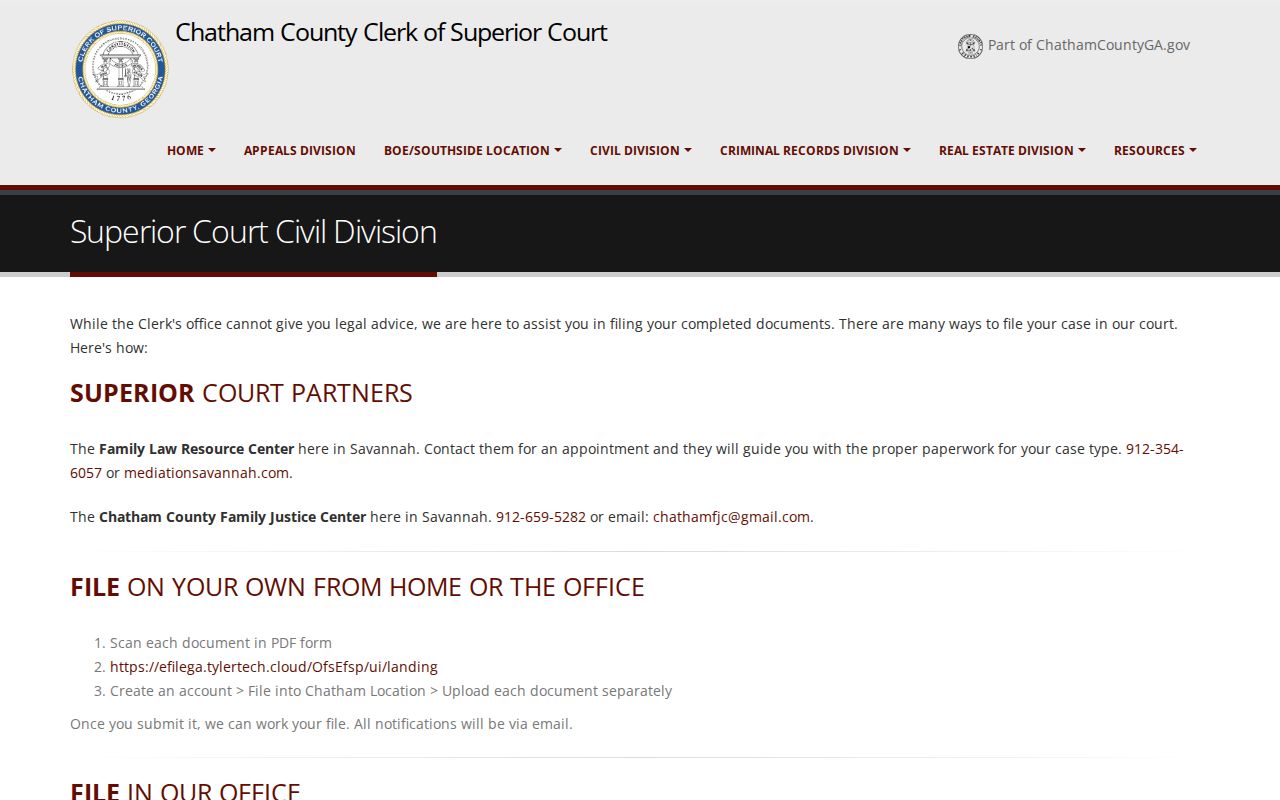
The clerk page also draws a line between two record layers. One is the public docket entry for an event. The other is the actual document filed in the civil case. When you request a copy, be specific. Give the case number, case style, the exact document, a date range if known, your delivery preference, and your contact information. Ask for certification only when you truly need one. A plain screen view or ordinary copy never carries the clerk's certification.
Civil Docket Access Rules
A public Chatham County civil docket usually shows case metadata, party roles, event headings, hearing information, and public status. It does not display every filed image. Anonymous Odyssey users see only nonconfidential, nonsealed information, and registered document access may require clerk approval plus payment.
Georgia access rules:
Georgia Open Records Act, O.C.G.A. §50-18-70, supports access to nonexempt public records through the custodian.
Uniform Superior Court Rule 21 sets the general public-access rule and the process for limiting, sealing, or redacting court files.
O.C.G.A. §9-11-7.1 and §10-1-393.8 support local limits on public display of protected identifiers.
Some civil records stay limited or hidden: domestic matters, protective orders, juvenile cases, sealed files, and confidential material. No written open-records request can override a seal. If your docket search comes up empty, confirm you have the right court, retry with the case number or a business name, and ask the correct clerk which public copy route applies.
Chatham Civil Docket Copy Fees
Chatham County sets out its fees by schedule. Under the schedule effective July 1, 2024, a Superior general civil or domestic filing costs $218, plus service where applicable. A subpoena runs $5, sheriff service is $50 plus $0.50 per page, and ordinary copies cost $0.50 per page. Certain listed family-violence and stalking matters carry no fee.
| Superior item | Published amount |
|---|---|
| General civil or domestic filing | $218 plus applicable service |
| Incoming transfer | $50 |
| Subpoena | $5 |
| Ordinary copy | $0.50 per page |
| Oversized copy | $2 |
The Superior Clerk civil intake schedule provides the official fee detail.
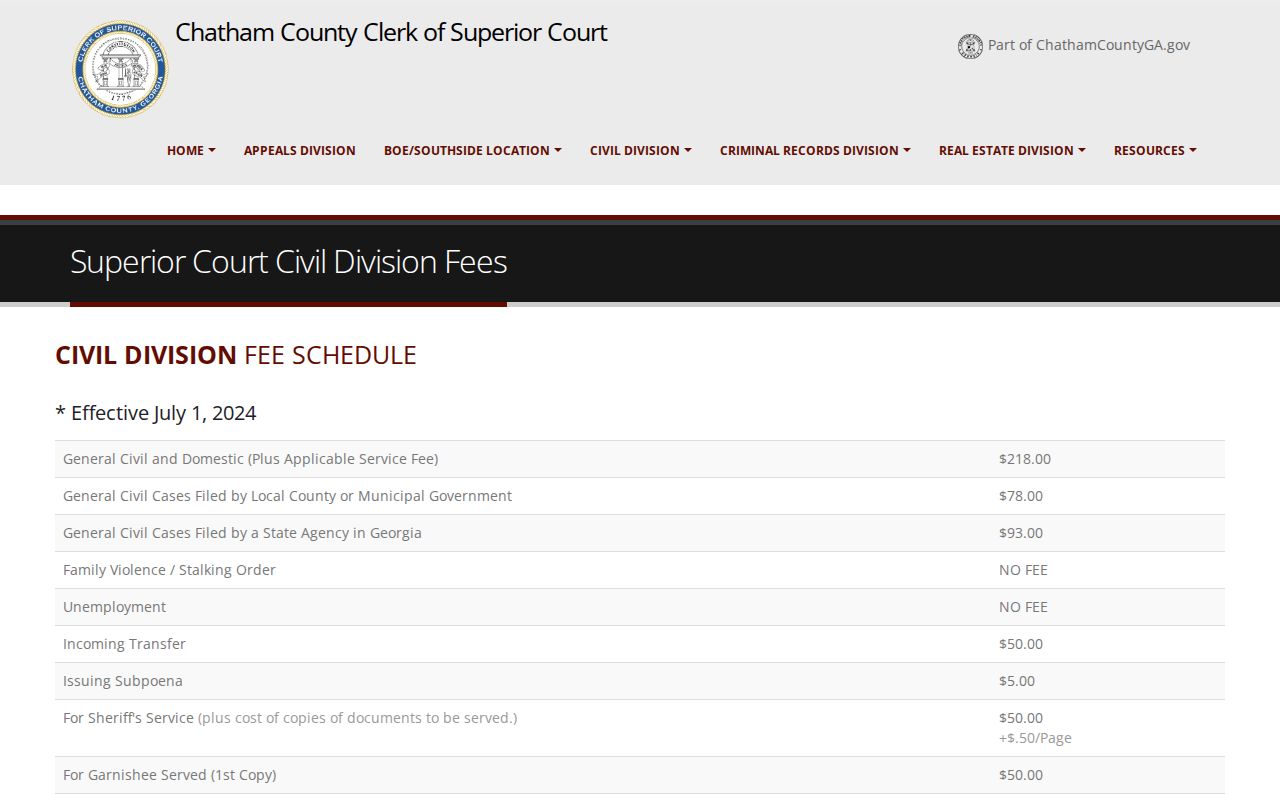
Check the fee page before you file or order copies, because the type of action and the service method drive the final charge. Magistrate Court keeps a separate schedule. A Magistrate civil suit, dispossessory, garnishment, or personal-property foreclosure is listed at $53, with service fees that vary by action. Never merge the two tables into a single estimate.
Chatham County Civil Docket Scale
How busy is this civil docket? The 2024 Georgia Superior Court Workload Assessment reports a three-year Eastern Judicial Circuit average. It comes to 3,760 civil cases. That figure splits into 1,126 general civil cases and 2,634 domestic-relations cases. Keep in mind the source is circuit-wide and self-reported, not a live count of Chatham County cases.
That volume explains why a broad name search on the civil docket can turn up a lot of noise. It also argues for picking the right court, using a case number whenever you can, and keeping the docket index separate from the clerk's full case file. The State Court clerk contact form offers another official civil-record routing point, and that page connects you to the clerk who handles State civil filings.
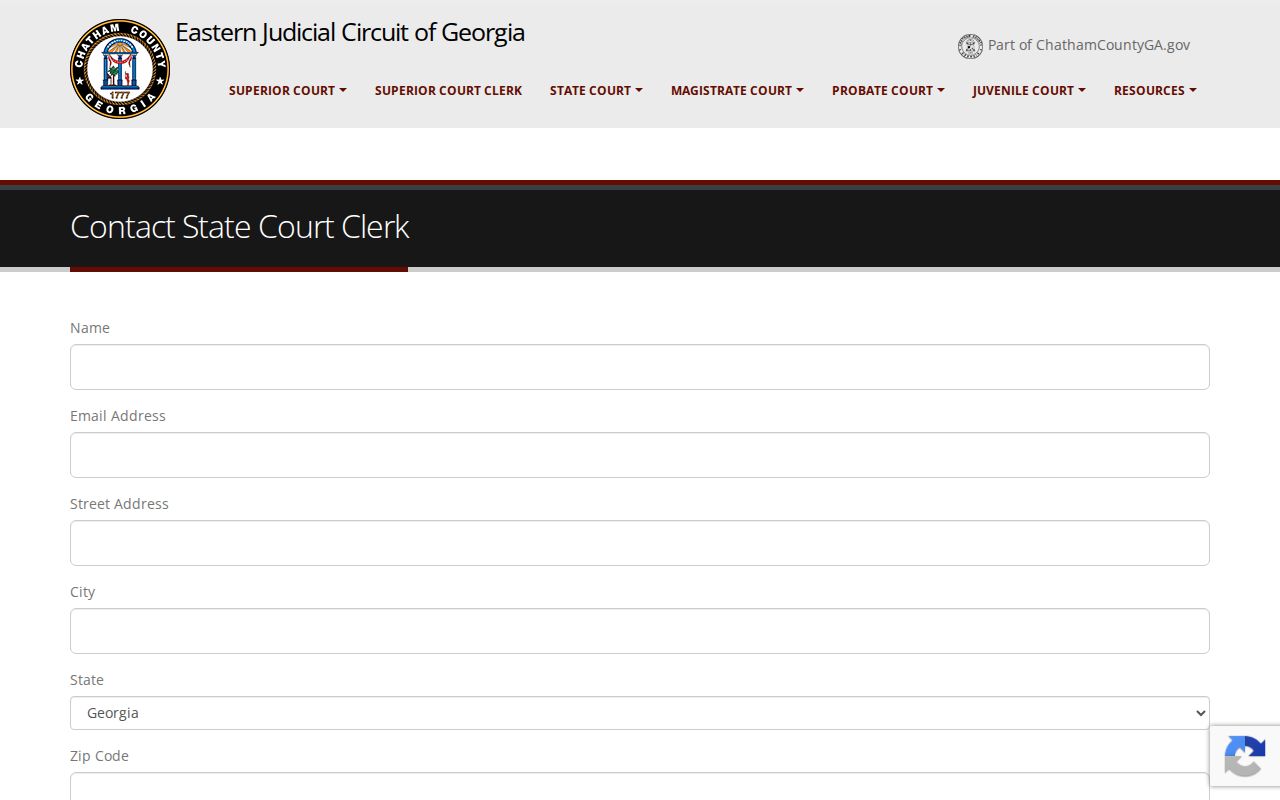
Contact the State Court clerk once you know the exact civil case and record you need. Before that point, the docket itself answers most questions.